
How to make a sigil
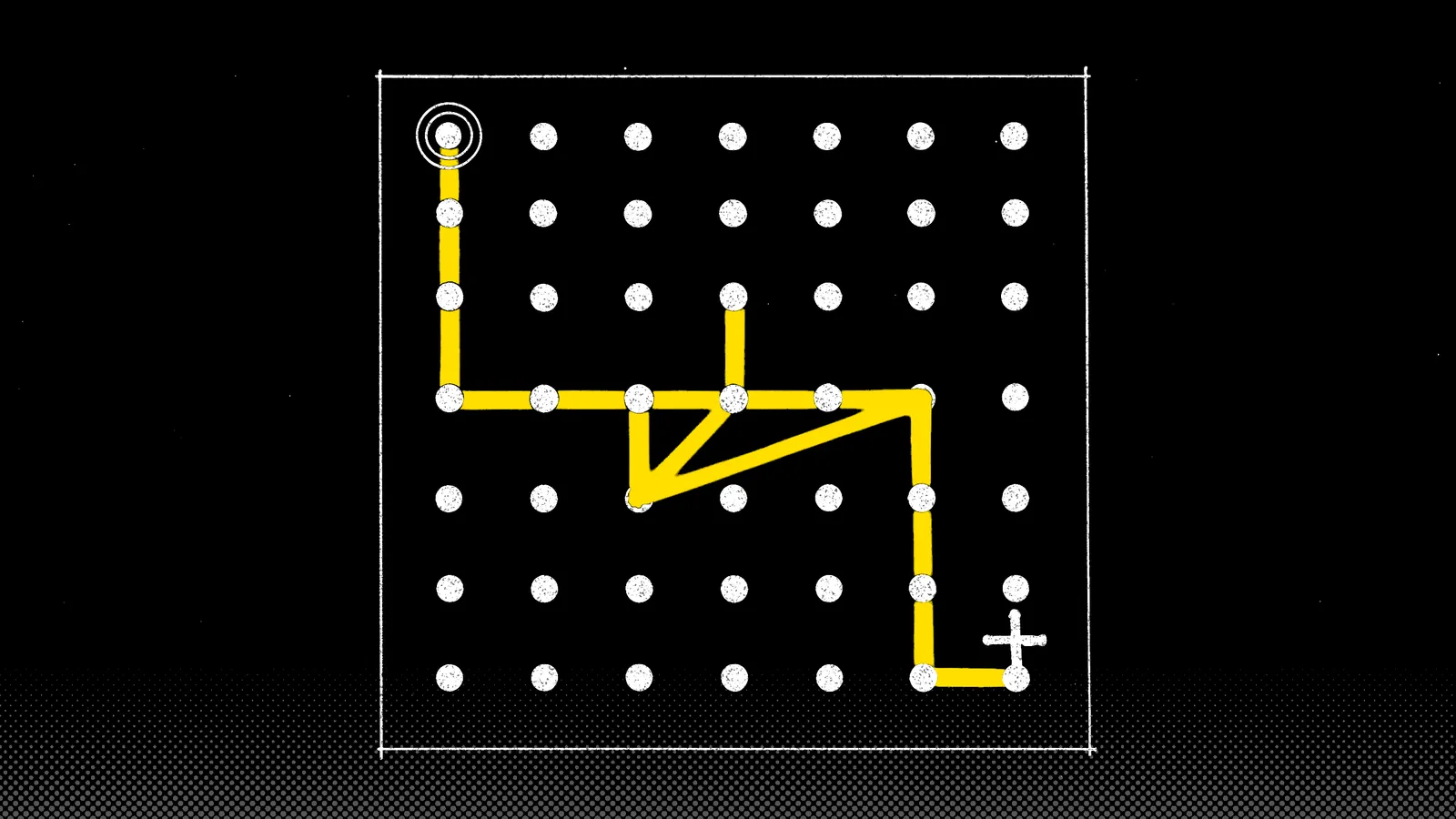
To make a sigil, write what you want as one present-tense sentence, cross out the repeated letters, draw what is left as a single mark, hold your attention on it for a few minutes, then destroy it and forget it.
A sigil is a compressed instruction. You write what you want, strip the meaning out of it, and hand it to the part of your head that runs in the background.
Ten minutes, five steps. Chaos magic, or chaos magick, uses it more than any other technique because it is cheap, quick and easy to check.
One of my steadiest sigils had the dullest job I ever gave one. Keep a lighter in my pocket. It still does. Start that small.
The method is Austin Osman Spare's, from The Book of Pleasure in 1913. State the desire as a sentence, strike out the repeated letters, and merge what is left into one mark.
Ray Sherwin's The Book of Results set it out in plain terms in 1978, and chaos magic has run on it since. Here it is, so you can run it tonight.
1. Write it
One sentence, present tense, as if it were already true.
Drop "I want." Wanting describes not having it. Drop "I will try," which writes the failure into the order.
Drop negatives too. "I do not lose my keys" still names the keys and the losing. Say the outcome: "I always know where my keys are."
A common opener is "It is my will to..." and then the thing. It is stiff, and the stiffness helps. It reads like a decision.
Keep it small enough to check. "I sleep through the night" can be checked. "My life improves" can never fail, so it can never teach you anything.
2. Reduce it
Write the sentence in capitals. Cross out every letter that repeats and keep the first of each. Some people strike the vowels as well.
What is left is the spine: a short string of letters that no longer reads as the want. You are deleting the readable copy so your conscious mind has nothing to reopen.
3. Draw it
Turn the spine into one mark. Three ways work.
- The monogram. Stack the letters and keep redrawing until you cannot read them. Flip a few. Turn a few. Join the strokes.
- The wheel. Put the alphabet round a circle and trace a line from letter to letter, a dot to start and a bar to end.
- The grid. Lay the alphabet into a five by five square and trace the path through it.
Pick any. The test is whether you can still read the intent in the mark. If you can, redraw.
4. Charge it
Charging means full attention on the mark while the chatter goes quiet. The usual word is gnosis.
Spare leaned on exhaustion to get there. The glossary in his book defines it as a vacuity, wrung out until it is open to the sigil.
I use slow breathing. Same door, no hangover.
Box breath is four in, four hold, four out, four hold. The longer pattern is four in, seven hold, eight out.
Keep your eyes on the mark for one to five minutes. When your mind wanders, bring it back without arguing with it.
Stop when the mark goes dull to look at. Five minutes is the ceiling.
5. Forget it
The step everyone skips is the step that does the work. Destroy the mark. Burn it, tear it, delete it.
Then go do something else: make dinner, take the trash out, answer the email you were dodging.
Spare's point was that the sigil runs while you are not holding it. Every time you check on it you reattach the meaning you just stripped off. That is a corrupted packet.
When the thought comes back, thank it and let it go.
Close the working with a thank you. Two words. It tells your head the job is handed off.
Check it in a month
Set a date a month out and write only "check the results." On the day, read what you logged and what happened. Mark it held, partly, or nothing.
Keep the check. A sigil you never test is a hobby. Test a dozen and you have data on which kinds of jobs work for you.
The Foundry runs all five on screen
It flags weak wording, shows the cut letter by letter, draws with any of the three methods, times the charge and prints a receipt. The receipt keeps the date and drops the intent. It runs in your browser and nothing you type leaves it.
Art: Team Zer0